
A few years ago I watched a camper at the next site spend most of an evening fiddling with a small portable heater inside his tent. He kept it on, switched it off, moved it, and complained that the tent still felt cold. Meanwhile, the family two sites over had no heater at all and looked perfectly comfortable.
The difference wasn’t gear. It was habits.
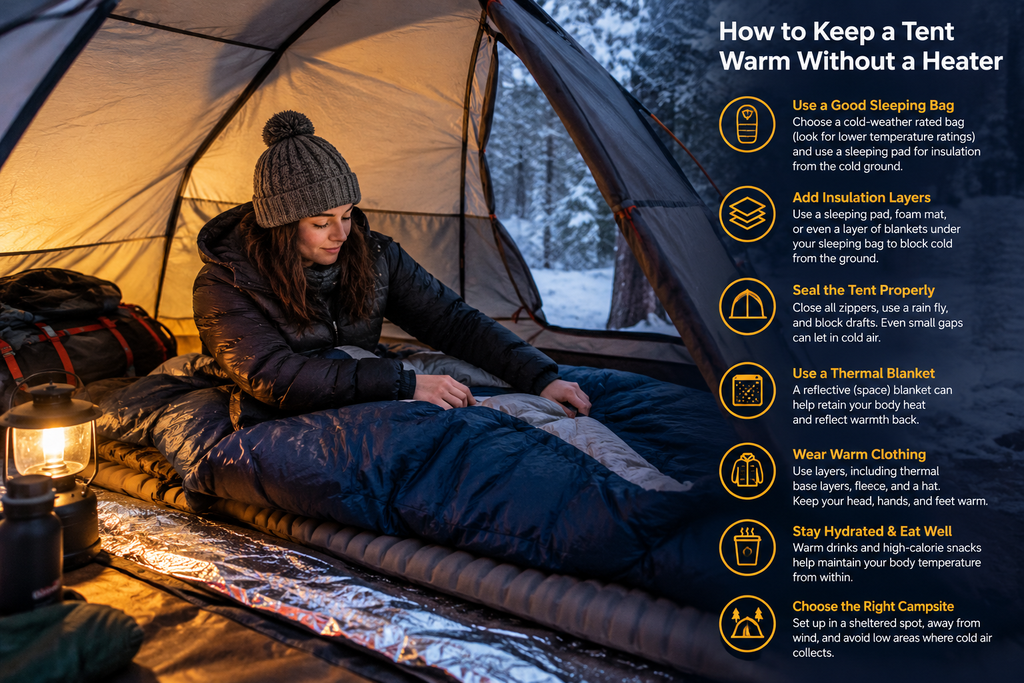
A tent is basically a thin shell. It can’t generate heat, so staying warm comes down to three things: keeping the heat you make, blocking the cold that tries to get in, and not creating problems like dampness. You can do all of that without a heater, and honestly, you’ll be safer for it.
Why most tents feel colder than the weather says
Tent fabric is thin, and a lot of cold gets in through the floor and through gaps. Wind makes it worse by pulling warm air out and pushing cold air in. So before you think about adding heat, think about stopping heat loss.
Here’s what I’d do, roughly in the order I’d do it.
1. Pick your spot like it matters (because it does)
Where you pitch changes the night more than most gear upgrades.
- Get out of the wind. Trees, a hill, a rock wall, or even a parked vehicle can cut gusts a lot. Just avoid camping right under dead branches.
- Avoid the lowest ground. Cold air sinks overnight and settles in dips and valley floors. A spot slightly higher up is often a few degrees warmer.
- Look for morning sun. A site that catches early light will warm up faster, and your tent will start drying out sooner.
- Stay away from water. Streams and lakes add damp, cold air.
2. Choose a smaller tent if you can
This one surprises people. A big tent feels great in summer, but in the cold, you’re the only heat source and a large space is harder to warm. A snug tent that fits the number of people you actually have holds heat better.
If you camp with a partner, a two-person tent is often warmer than a four-person one, even if the four-person feels roomier for gear. Keep the bulky stuff in the vestibule instead.
3. Insulate the floor properly
Most of the heat you lose in a tent goes into the ground. If you only fix one thing, fix this.
- Lay a footprint or ground tarp under the tent.
- Put a foam mat or a few interlocking foam tiles inside the tent, over the floor.
- Use a good sleeping pad on top of that. If you want the full breakdown on pads, we covered it in our December camping tent guide.
A rug or a thick blanket on the tent floor also helps and makes the tent feel more comfortable when you’re sitting in it.
4. Seal the drafts, but keep ventilation
This is a balance, and people get it wrong in both directions.
Close the zippers fully, tighten the rainfly, and make sure the fly doesn’t sit flat against the inner tent, since that lets cold pass straight through. Guy the fly out so there’s an air gap between the two layers. That gap acts as a little insulation.
But don’t seal everything shut. Breathing and sleeping put moisture into the air, and trapped moisture makes you colder. Leave a small vent open, even if it feels counterintuitive. A dry tent holds warmth far better than a stuffy, damp one.
5. Warm up before you get in
Your sleeping bag only keeps in the heat you give it. If you climb in cold, it takes a long time to warm up.
- Walk around camp or do a few minutes of light exercise before bed. Don’t overdo it, because sweating will chill you later.
- Have something warm to eat or drink right before sleep. A hot meal and a warm, non-caffeinated drink help.
- Eat a small snack before bed. Digesting food produces heat.
6. Dress for sleeping, not just for the day
Wear dry base layers to bed and change out of anything damp. Add a clean pair of socks, a warm hat, and, if needed, a thin neck gaiter. A lot of body heat leaves through the head.
One tip I stick to: don’t wear too many bulky layers inside your bag. Overstuffing it with thick clothing can compress the insulation and leave cold spots. A few thin layers usually beat one heavy one.
7. Use heat sources that are safe
A heater isn’t the only way to add warmth. Some simple options:
- A hard-sided water bottle filled with hot water, placed near your core or feet in the sleeping bag
- Disposable hand and foot warmers (use them according to the package instructions)
- A pre-warmed sleeping bag liner
Please avoid bringing stoves, grills, candles, or fuel-burning heaters into the tent for warmth. Carbon monoxide can’t be seen or smelled, and tent fabric can catch fire quickly. If a tent-specific heater is something you’re considering, read the manufacturer’s safety instructions carefully, make sure it’s designed for that use, and never leave it running while you sleep.
8. Set up a warm space outside the tent
A lot of the evening is spent outside the tent, and that’s where people lose heat before bed. A canopy or tarp over your sitting and cooking area blocks wind and keeps frost off your gear. If you’re thinking about one, take a look at our thoughts on tarps versus traditional shelters, and keep in mind that wind and snow can load up a canopy quickly, so check the weather and take it down if conditions turn.
9. Keep your gear dry
Wet gear is cold gear. Keep wet boots and jackets in the vestibule, not next to your sleeping bag. Hang damp items to dry during the day if there’s any sun, and keep tomorrow’s clothes inside your bag so you don’t wake up to frozen socks.
10. Prepare for the morning
The coldest part of the night is usually just before sunrise. Have a warm layer ready, and keep a headlamp and gloves within reach so you aren’t digging around in the cold. If you can, set a small stove up outside with a hot drink ready as soon as you get up, and use it away from the tent.
Common mistakes to avoid
- Sealing the tent completely and ending up with heavy condensation
- Sleeping directly on the ground or a thin pad
- Wearing damp clothes to bed
- Using a bigger tent than you need
- Bringing fuel-burning appliances inside
Quick checklist
- Wind-sheltered, slightly elevated pitch
- Footprint plus a foam layer inside
- Rainfly guyed out with an air gap
- A small vent left open
- Dry sleep layers, hat, and clean socks
- Hot water bottle in the sleeping bag
- Warm drink and snack before bed
FAQs
How can I keep my tent warm at night without electricity?
Insulate the floor, block drafts, pitch out of the wind, wear dry layers, and use a hot water bottle. These steps work without any power or fuel.
Does a smaller tent stay warmer?
Usually yes. There’s less air for your body heat to warm, so a snug tent tends to feel warmer than a large one.
Is it safe to use a heater in a tent?
Only if the heater is specifically made and rated for tent use, and even then you should follow the instructions and never leave it on while sleeping. Ordinary fuel-burning heaters and stoves are not safe inside a tent because of carbon monoxide and fire risk.
Why does my tent feel colder in the morning?
Temperatures drop to their lowest right before sunrise, and any moisture inside the tent makes it feel colder. Good ventilation and dry clothes help.
Final thoughts
You don’t need a heater to be comfortable in a cold tent. You need a sheltered site, a well-insulated floor, a dry tent, and a few habits that keep your body warm. Get those right and the cold becomes a lot easier to deal with.
One thought on “How to Keep a Tent Warm Without a Heater”