
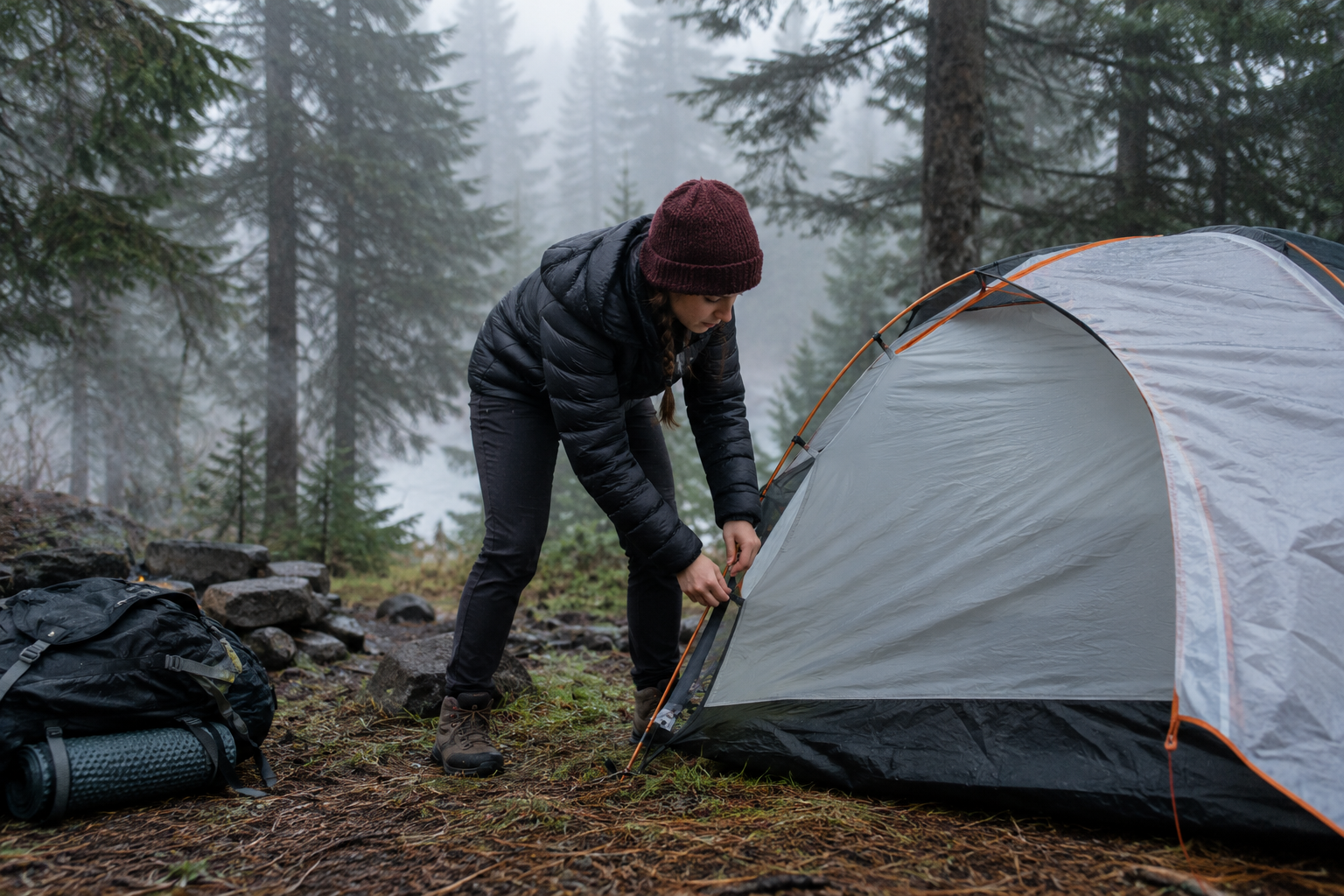
The first time I camped this late in the year, I made the mistake most people make. I took my regular summer tent, added an extra blanket, and told myself it would be fine.
It was not fine. By 3 a.m. the inside of the tent was dripping, my sleeping bag was damp at the foot end, and I was lying there doing math on how many hours were left until sunrise.
Late November and December can be some of the best camping of the year. The campgrounds are quiet, the air is clear, and nobody is fighting you for the good spot. But the tent does a lot more work in the cold, and the wrong one will make for a long night. Here is what I’d look at before you book anything.
Is your tent actually ready for December?
Most tents sold today are “3-season” tents, meaning spring, summer, and fall. They’re light, they breathe well, and they’re built for rain and moderate wind. They are not built for heavy snow or hard winter storms.
That doesn’t mean a 3-season tent is useless in December. If you’re camping in the cold but not in deep snow, it can work well, as long as you know its limits.
Here is the simple way to think about it:
- 3-season tent: Fine for late November and early December in mild or moderate climates. Cold nights, light frost, and rain are manageable. Heavy snow is not.
- 3-season+ or “extended season” tent: A good middle ground. These usually have fewer mesh panels and a sturdier pole setup, so they hold heat and handle wind better.
- 4-season tent: Built for snow load and strong wind, with stiffer poles and fabric that traps more warmth. They are heavier and pricier, and in a mild December they can feel stuffy.
If you’re not sure, think about where you’ll actually camp. A forest campground that drops to a few degrees above freezing is a very different trip from a mountain site where snow is forecast. Buy for the second one only if that’s really where you’re going.
Why condensation is the real December problem
Cold is easy to solve with the right sleeping bag. Moisture is harder.
When you breathe out inside a closed tent, that warm, damp air hits the cold tent wall and turns into water. In summer you barely notice it. In December it can soak the inside of the tent and drip on you.
A few things help more than people expect:
- Vent it, even when it feels wrong. Crack the top vents or leave the door slightly open. It feels like you’re letting the warmth out, but you’re also letting the moisture out. A drier tent is a warmer tent.
- Choose a double-wall tent. The inner layer stays separate from the rainfly, so the damp collects on the outer wall instead of on you.
- Pitch away from low, damp ground. Cold air and moisture settle in dips and next to streams. Slightly higher, more open ground is usually drier.
- Don’t bring wet gear inside. Wet boots and a damp jacket will add moisture to the air all night. Keep them in the vestibule.
Setting up in cold, hard ground
Frozen or very cold ground changes how you pitch a tent. The thin stakes that came in the bag often won’t go in, or they bend when you push them.
- Bring stronger stakes. Sturdy metal stakes make a real difference. Plastic ones tend to snap in cold ground.
- Use a small mallet. A rock works in a pinch, but a mallet saves your hands and your stakes.
- Guy out the rainfly. Wind is more common this time of year, and a tent with taut guy lines handles gusts much better. If wind is something you worry about, our guide on how to stop your camping canopy from flying away in wind covers anchoring in more detail.
- Pitch with the door away from the wind. It’s a small thing, but it keeps cold air from pouring in every time you open the zipper.
The part under your tent matters more than the tent
Here’s something that surprised me. Most of the cold you feel at night comes from the ground, not the air.
Your sleeping pad is your real insulation from below. Pads have an R-value, which is simply a measure of how well they resist heat loss. For cold-weather camping, a higher number is better, and many campers aim for something around R-4 or above for winter nights. Check the manufacturer’s guidance for the conditions you expect.
Layering helps too. A foam pad under an inflatable pad is a cheap, reliable upgrade. A footprint or ground tarp under the tent also adds a layer and keeps the tent floor cleaner and drier.
Sleeping bag, clothes, and the small stuff
A tent will only trap the heat you bring into it. A few habits that I’ve found make nights easier:
- Pick a sleeping bag with a comfort rating below the lowest temperature you expect, not at it.
- Change into dry sleep clothes before you get into the bag. Sweat from the day will make you cold fast.
- Keep tomorrow’s socks and base layer inside the bag with you so they’re warm in the morning.
- Fill a hard-sided bottle with hot water and put it near your feet. It sounds basic because it is, and it works.
- Keep your phone and any batteries close to your body. Cold drains them quickly.
A word on safety
Please don’t cook inside your tent, and don’t use a gas or charcoal heater in it unless the product is specifically made and rated for tent use. Carbon monoxide is odorless, and a closed tent is exactly where it builds up. Cook outside or under a covered area with good airflow, and keep any flame well away from the fabric.
If you want a sheltered cooking or sitting area, a canopy or tarp pitched next to the tent is a good option. Just keep an eye on the weather. Snow can pile up on a canopy roof and wind can catch it quickly, so take it down if conditions turn. Our piece on why campers choose a tarp over a traditional shelter is worth a read if you’re weighing the two.
Pack it up the right way
When you get home, dry the tent completely before you store it, even if that means setting it up in the garage or hanging it over a few chairs. Packing it away damp is how you end up with mildew by spring. We wrote a full walkthrough on how to clean and store your camping tent that covers the details.
Quick checklist for a December camping trip
- Tent suited to the temperature and weather you expect
- Strong stakes and a mallet
- Sleeping pad with a good R-value, plus a ground layer
- Sleeping bag rated below the expected low
- Dry sleep clothes and spare socks
- Headlamp with fresh batteries (it gets dark early)
- A plan for cooking outside the tent
- Extra layers, hat, and gloves
Frequently asked questions
Can I use a 3-season tent in December?
Yes, in many places. It works well for cold, dry or rainy conditions and light frost. For heavy snow or strong storms, a sturdier 4-season tent is the safer pick.
How do I stop condensation in a cold tent?
Ventilate the tent, use a double-wall design, pitch on higher and drier ground, and keep wet clothes outside the sleeping area.
What is the best tent for camping in late November?
For most campers, a good 3-season or extended-season tent with a full rainfly is enough. Choose a 4-season model only if you expect snow.
Do I need a footprint in winter?
It isn’t required, but it adds insulation, protects the tent floor, and helps keep moisture away from the fabric.
Final thoughts
December camping isn’t harder, it just asks for a bit more planning. Get the tent right, take the ground seriously, and keep moisture under control, and the cold stops being the story. You’ll mostly remember the quiet and the stars.