

To be honest with you, I was skeptical when I started my investigation on this subject. The term “eco-friendly” is applied to outdoor equipment so frequently that it has come to seem like a marketing ploy rather than a meaningful assertion. The term “sustainable” on a hangtag and a green leaf logo don’t actually convey anything about a product’s environmental impact.
However, I came away with a more nuanced perspective after thoroughly researching this, reading materials science articles, speaking with gear designers, and trying a number of the more recent sustainable tent options available on the market. In the tent industry, some of what is referred to as “eco-friendly” actually is.
In a literal sense, some of it is greenwashing. Furthermore, it turns out that the answer to the question “is it worth buying?” largely depends on your personal values and how you want to use the tent.
What makes a tent truly more sustainable, which environmental promises to believe and which to doubt, how sustainable tents actually function in the field, and if the higher price tag makes sense for your circumstances are all covered in this article.
Why Traditional Tent Manufacturing Is an Environmental Problem
You must first understand the environmental effects of traditional tent manufacture in order to understand what sustainable tents are attempting to address. The image is not attractive.
The Problem with Traditional Tent Fabrics
Nylon and polyester, two synthetic plastics produced from petroleum, are used to make the majority of tents. The production of these materials uses a lot of energy, depends on feedstocks from fossil fuels, and emits a lot of carbon. In the past, these textiles’ waterproof coatings have presented even more challenges.
The outdoor industry used PFAS (per- and polyfluoroalkyl compounds), sometimes known as PFCs or C8/C6 chemistry, for DWR coatings for decades. Although PFAS are incredibly good at keeping stains and water away, they are also persistent environmental contaminants. They bioaccumulate in living things, do not decompose in the natural world, and have been found in distant alpine lakes, human blood, and Arctic ice. Some PFAS compounds have been designated as dangerous chemicals by the EPA.
Since about 2015, the outdoor industry has been shifting away from long-chain PFAS (C8), and by 2023, the majority of big brands will have switched to shorter-chain chemistry or non-PFAS substitutes. However, the efficacy and longevity of “PFAS-free” coatings differ greatly, as we’ll discuss below.
Pole Production and Plastics
Usually, fiberglass or aluminum are used for tent poles. Despite being infinitely recyclable, the manufacture of aluminum requires a lot of energy. Fiberglass poles are generally unable to be diverted from landfills at the end of their useful lives because they are composed of non-recyclable glass fibers in a polymer matrix. Tent stakes, buckles, guylines, and other parts contribute more garbage made of plastic and metal. Before a traditional mid-range tent is delivered to a retailer, it has an unexpectedly huge material footprint.
What Actually Makes a Tent ‘Sustainable’? The Real Criteria
This is where reality and marketing differ. The assertions you’ll notice and their true meanings are as follows:
Recycled Fabric Content
either recovered fishing nets or post-consumer plastic bottles (rPET). Because it lessens the need for new petroleum extraction and usually has a smaller carbon footprint per yard of fabric produced, this is a true improvement over virgin synthetic fabric.
But “recycled” does not equate to “low impact.” It still takes a lot of energy to recycle and repurpose plastics into fiber. Additionally, when wet, recycled synthetics continue to release microplastics, which is a serious environmental issue in water systems that recycled material does not address.
What to look for: Brands that indicate the source of the recycled material, the proportion of recycled content (look for 80%+ recycled fabric, not just “partially recycled”), and third-party certification (bluesign, Global Recycled Standard, or Repreve certification are relevant).
PFAS-Free Waterproof Coatings
Given that PFAS compounds are actually dangerous and preventable, this is one of the most significant claims in environmentally friendly camping gear. Companies that have removed PFAS from their DWR coatings have significantly improved the environment.
The trade-off is that, compared to PFAS-based coatings, current PFAS-free coatings (mostly based on fluorine-free chemistry, or C0 DWR) are typically less durable and may need more frequent reapplication to maintain water repellency. As the chemistry gets better, the performance gap has been gradually closing, however it differs by brand and product. In typical camping situations, several modern PFAS-free alternatives function similarly to earlier PFAS treatments.
“PFC-free” or “PFAS-free” DWR treatment is what to seek for. Companies that provide comprehensive details regarding their coating chemistry, such as Patagonia, Nemo, and Fjøræven, have taken the lead in this area.
📌 Note: In the industry, “PFC-free” and “PFAS-free” are synonymous. Both indicate the absence of polyfluoroalkyl and perfluoroalkyl compounds in the waterproof coating. This is a significant difference from “C6 chemistry”; C6 PFAS is still PFAS but has a shorter chain than C8.
blue-sign Certification
Blue Sign is a third-party accreditation for textile manufacturing that assesses the production process’s use of chemicals, resource efficiency, worker safety, and environmental impact. One of the most stringent and significant certifications in outdoor textiles, a blue sign-certified tent fabric indicates that the production process has been independently examined for these requirements.
Blue sign accreditation is a dependable sign of real sustainability effort rather than just marketing rhetoric, although not all sustainable tents have it (it’s a substantial certification expense for manufacturers).
Repairability and Longevity Design
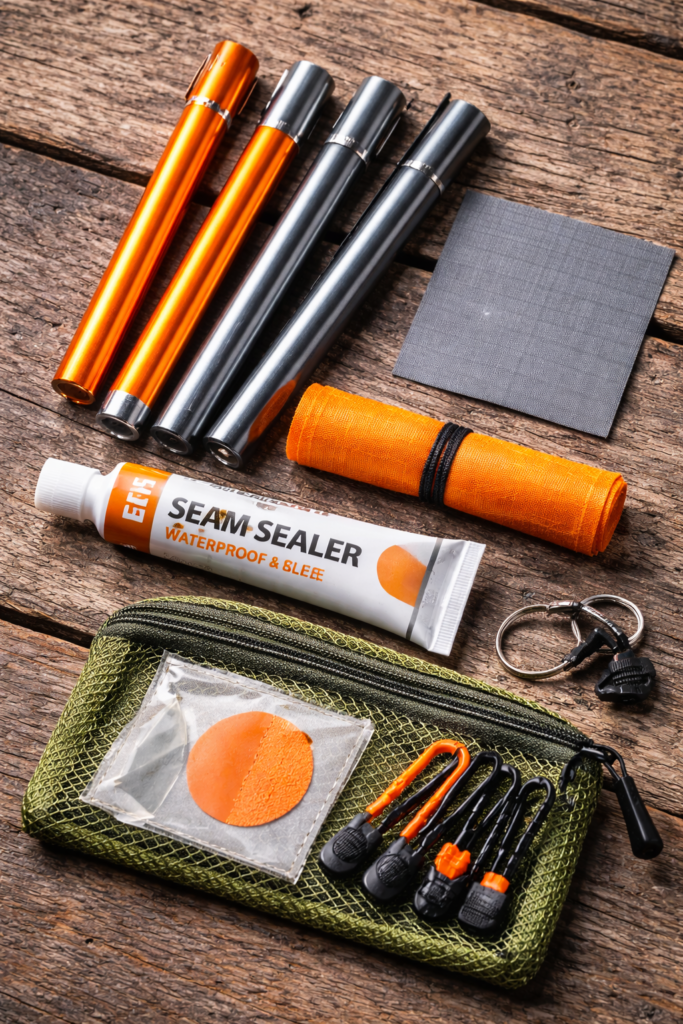
This is the aspect of sustainability that most people completely ignore: regardless of the material, the most environmentally friendly tent is the one you purchase once and use for twenty years. Compared to a “recycled fabric” tent that ends up in a landfill after four seasons because replacement parts are unavailable, an easy-to-repair tent with replaceable poles, user-serviceable zippers, and compatible replacement parts available for years after purchase has a significantly smaller environmental impact.
Some outdoor companies, like Hilleberg, Fjøræven, and MSR, have demonstrated a sincere dedication to repairability by producing replacement parts and providing repair services for tents that were sold ten or more years ago. The long-term availability of parts may have a greater environmental impact than the composition of the fabric.
How Do Sustainable Tents Actually Perform?
Environmental credentials are meaningless if the tent fails in the field. Let’s talk performance honestly.
Weight
In terms of weight-to-strength ratios, recycled synthetics have mostly caught up to virgin materials. There is no discernible difference in weight between a well-designed tent made of recycled ripstop nylon and one made of virgin nylon. Some of the best-performing ultralight tents available today are composed mostly of recycled materials. For example, NEMO’s Osmo fabric, which is bluesign-certified and performs at least as well as conventional materials, is produced from a polyester/nylon blend with exceptional dimensional stability.
Waterproofing
This is where you need to focus the most because sustainable tents have historically trailed. Compared to their PFAS predecessors, PFAS-free DWR coatings require more upkeep and reapplication. Under testing settings, some PFAS-free coatings start to noticeably wet out after 10–15 rain exposures without maintenance, while a PFAS coating may continue to function for more than 30.
Practically speaking, this means that if you purchase a sustainable tent with PFAS-free DWR, budget for and schedule DWR reapplication every season or every five to eight camping excursions. It costs a few bucks per treatment and adds twenty minutes to your maintenance schedule. This is completely doable for the majority of campers.
Sustainable tents are currently on par with conventional tents in terms of fly and floor waterproof membranes (the coatings that actually make the tent waterproof, not just the DWR). The waterproof membrane below, which is not PFAS-based in any contemporary tent, is what actually produces beading; the DWR is the exterior treatment.
Durability
When the same denier (fabric weight) and weave structure are applied, recycled nylon and polyester fabrics are typically as durable as their virgin counterparts. The fabric’s durability is determined by its specifications (denier rating, ripstop weave, floor coating weight), not by whether it is composed of virgin or recycled materials. The sustainability of the material does not make the fabric weaker or thinner.

The Price Premium
Sustainable tents typically carry a 10–25% price premium over conventional equivalents. Whether this is ‘worth it’ depends on how you weigh several factors:
The Premium Reflects Real Costs
The discovery of PFAS-free coating chemistry, ethical manufacturing, recycled material procurement, and bluesign certification all actually cost more than traditional production. A large amount of the extra that a brand charges for a certified sustainable tent is actual additional costs rather than merely marketing margin.
This is very different from, say, a food product labeled as “organic,” where the premium is out of proportion to the true expense of organic cultivation. The supply chain for sustainable materials in technical outdoor gear is actually more costly to construct and maintain.
The Longevity Argument
A sustainable tent may be more cost-effective during a ten-year ownership term than a less expensive conventional tent that needs to be replaced after four or five seasons if it is built for durability, with good repairability support, high-quality construction, and maintained parts availability.
This is how the math works: a $350, 15-year sustainable tent costs $23 annually. The annual cost of a six-year, $180 standard tent is $30. When you account for its actual lifespan, the “cheaper” tent is frequently not
The Market Reality
Not every sustainable tent claim is the same, and true sustainability improvement isn’t necessarily commensurate with the higher price. Here is a brief framework for determining if a premium is warranted:
Worth the premium:
- bluesign certified fabric — independently audited manufacturing
- PFAS-free DWR with transparent chemistry disclosure
- 80%+ recycled content with third-party verification (GRS, Repreve)
- Brand has documented repair program and long-term parts availability
- NEMO’s Dagger Osmo, Fjällräven Keb, Patagonia tents — all meet multiple criteria
Probably just greenwashing:
- ‘Eco-friendly’ with no specific certifications cited
- ‘Partially recycled’ without percentage disclosure
- Green branding on a product with no supply chain transparency
- No information about DWR chemistry or coating type
- Premium priced but no repair program or parts availability
Comparison: Conventional vs. Sustainable Tent Options
| Factor | Conventional Tent | Certified Sustainable Tent |
| Fabric material | Virgin nylon/polyester | Recycled nylon/polyester (rPET, rNylon) |
| DWR coating | Often PFAS-based (C6) | PFAS-free (C0 or fluorine-free) |
| DWR durability | Higher — less reapplication | Lower — needs more maintenance |
| Manufacturing audit | Rarely certified | bluesign or equivalent certification |
| Waterproof performance | Equivalent | Equivalent (membrane coating same) |
| Weight | Comparable | Comparable (same denier) |
| Repairability | Varies by brand | Better in premium sustainable brands |
| Price | Lower upfront | 10–25% premium |
| Lifespan (well cared for) | 8–12 years | 10–15+ years (better brand support) |
| End-of-life disposal | Landfill (most cases) | Some brands have take-back programs |
The Brands Actually Leading on Sustainability (And What They’re Doing)
NEMO Equipment
NEMO’s Osmo fabric — used across their tent line — is bluesign certified and made from a polyester/nylon blend that offers better dimensional stability than pure nylon (less stretch when wet, meaning better performance in rain). Their sustainability commitments are specific and publicly verifiable: PFAS-free coatings across the line, bluesign certification, and detailed supply chain disclosure.
Fjällräven
The Swedish brand is a genuine leader in sustainable outdoor gear, not just tent manufacturing. Their G-1000 fabric (a cotton/polyester blend) is long-lasting and designed for easy field repair and re-waxing with their own Greenland Wax. They use bluesign-certified materials extensively and publish detailed transparency reports on their supply chain. Their environmental commitments predate the ‘sustainable gear’ marketing trend by decades.
Patagonia
Patagonia’s Worn Wear program (which offers repair services for their gear, including tents) is one of the most serious brand commitments to longevity in the industry. They’ve been PFAS-free across their DWR treatments since 2022 and use recycled materials extensively. They also have a genuine take-back program for end-of-life gear.
Hilleberg
Hilleberg isn’t primarily marketed as a ‘sustainable’ brand, but their approach to tent manufacturing is arguably more environmentally sound than many brands wearing green labels. Hilleberg tents are designed to last 20–30 years with proper care, replacement parts are available indefinitely, and the company offers full repair service on any tent regardless of age. The most sustainable tent is the one that never needs replacing.
The Honest Verdict: Should You Buy a Sustainable Tent?
After doing all this research, here is my real response:
Choosing a certified sustainable choice makes sense if you’re in the market for a new tent anyway, especially if it comes from a company that has demonstrated its dedication to long-term maintenance service, bluesign certification, and PFAS-free coatings. The environmental benefit is genuine, the performance gap has mostly closed, and longer product lifespans and stronger brand support frequently justify the cost.
The most environmentally friendly option if you currently have a tent that works flawlessly is to keep using it, take good care of it (particularly DWR), and fix it rather than buy a new one. There is a carbon and material footprint associated with producing a new tent, even one that is sustainable. The tent you currently own is usually always the greenest.
Don’t buy a cheap sustainable tent if it has no certifications and ambiguous environmental claims. You’ll probably produce a subpar product that requires
replaced more quickly and offers no appreciable environmental advantages over a traditional equivalent. In this situation, purchase the trustworthy traditional tent and provide it proper maintenance.
💡 Pro Tip: The most environmentally beneficial thing you can do with camping gear is to significantly extend the life of whatever you currently own, rather than purchasing sustainable alternatives. Make it clean. Make sure you store it correctly. Fix it. A $350 sustainable tent used for four seasons has a greater lifetime environmental impact than a well-maintained $150 tent lasting fifteen years.
Frequently Asked Questions
Q: Do tents constructed of recycled cloth have the same strength as those made of virgin materials?
A: Insofar as the recycled cloth has the same weave structure and denier rating as its virgin counterpart. The fiber’s strength is not diminished by the recycled element. Strength is determined by the fabric specifications (ripstop weave, denier weight, coating thickness), not by the origin of the raw material (virgin or recycled).
Q: What does it really mean for a tent to be “bluesign certified”?
A bluesign certification indicates that the textile mill making the fabric has undergone an independent audit in accordance with stringent standards pertaining to worker safety, resource efficiency (water and energy use), and chemical safety. It is a trustworthy sign of true environmental improvement over uncertified alternatives and is one of the strictest third-party certifications in the textile industry.
Q: Are PFAS-free tent coatings really waterproof?
A: There is a significant difference between the waterproof membrane and the DWR surface treatment. The underlying waterproof membrane on the fly and floor (usually PU or silicone coating) is not PFAS-based in any modern tent and accomplishes the actual task of keeping rain out; however, PFAS-free DWR coatings generate less effective beading than PFAS-based ones and require more frequent reapplication. A well-kept PFAS-free tent is completely waterproof; it simply needs a little more upkeep.
Q: What is the most environmentally friendly way to get rid of an old tent?
A: First, think about if it can be fixed. Seam sealing, DWR reapplication, and pole replacement may revitalise many old tents. Some outdoor companies, like Patagonia, The North Face, and REI, have recycling or take-back programs if it’s truly unusable. Usable old tents may also be accepted by neighbourhood associations, outdoor education programs, or local gear libraries. The landfill ought to be the last option.
Q: Is cotton canvas a more environmentally friendly material for tents than synthetic?
A: Cotton canvas, which is utilised in conventional bell tents, wall tents, and canvas camping shelters, offers real sustainability benefits because it is a natural material that biodegrades at the end of its useful life and is very repairable. However, it is significantly heavier than synthetic materials, needs additional treatment to be waterproof, and typical cotton farming has a major negative impact on the environment (water consumption, pesticide use). Although it’s a speciality product for base camping rather than backpacking or lightweight use, certified organic cotton canvas is actually more sustainable than traditional synthetic.