
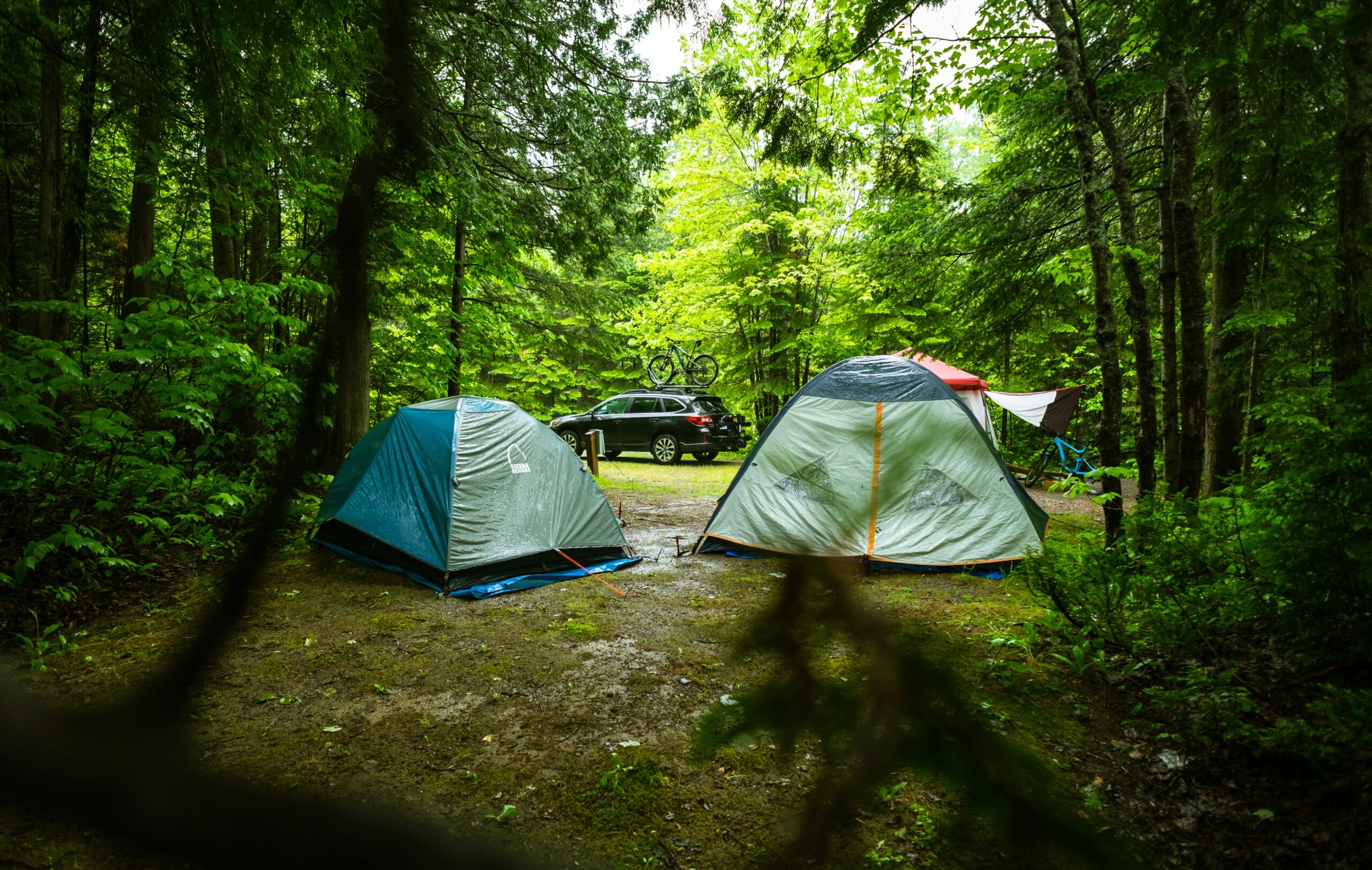
When my wife and I first went camping together, we carried just what most novices do: a single tent, a few sleeping bags, and a positive outlook. When we saw other campgrounds with complex arrangements, like a tent here, a large canopy shelter over there, and an entire kitchen area below it, we would genuinely believe they were going beyond.
We had a canopy after two camping seasons. It wasn’t because anybody forced us to, but rather because we’d endured enough uncomfortable hours in an excessively small tent during downpours, enough hot afternoons without shade, and enough scrambling during mealtimes to keep food dry that the answer became clear.
To be honest, though, we didn’t require a canopy right away. Furthermore, not all campers require one. Depending on how you camp, where you camp, and the actual friction points in your current arrangement, a canopy may or may not be a wise addition to your setup.
With no push to buy stuff, no upselling, and no general recommendations, this article will assist you in figuring that out.
First: What Does Each One Actually Do?
It may seem absurd, but a lot of campers, particularly those who are just starting out, are unaware of the differences between tents and canopies and their respective purposes.
What a Tent Does
A completely enclosed shelter is called a tent. It shields you from temperature, wind, rain, and insects. It’s where you sleep. It features a rainfly that covers the entire building, mesh panels for ventilation, and a waterproof floor. Your bedroom is the tent.
A good tent keeps you insect-free during bug season, relatively warm during cool weather, and dry during a deluge. It provides you with privacy. It closes with a zip. The tent is where all the important aspects of sleeping outside take place.
A tent’s shortcoming is its inability to offer a practical, covered living area. The majority of tents have a small vestibule for boots and are just big enough for sleeping. In anything except the smallest solitary setups, spending a lot of time inside a tent during the day—reading, cooking, or interacting with others—is claustrophobic and uncomfortable.
What a Canopy Does
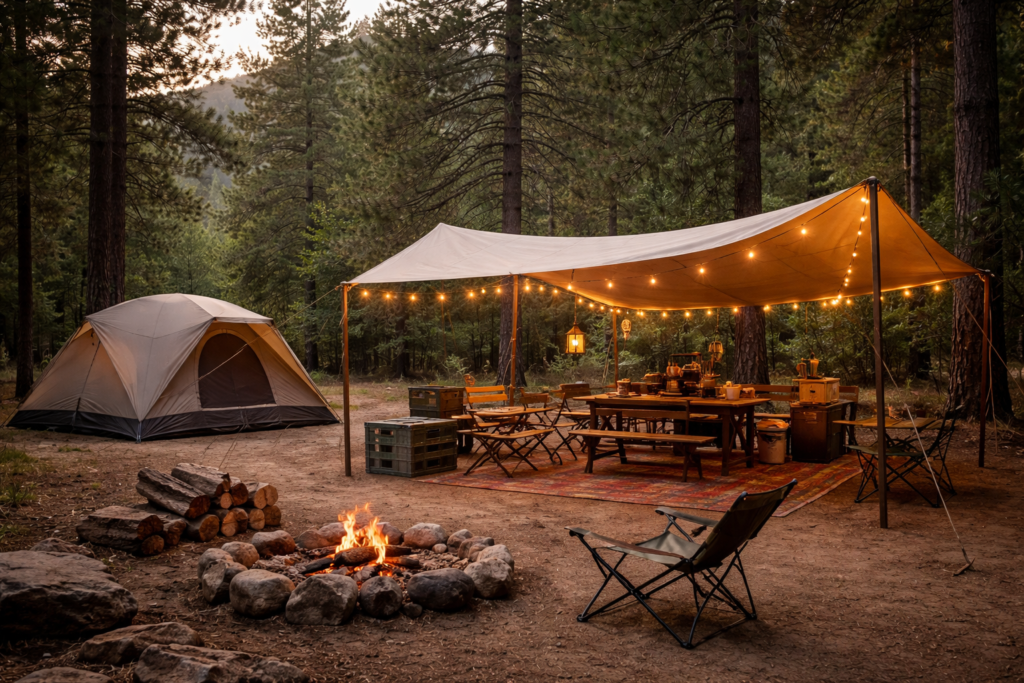
A canopy is an open-sided overhead structure, sometimes known as a pop-up shelter, shade shelter, or canopy tent. It lacks a floor, walls, and built-in wind and pest protection. It does a fantastic job of creating a spacious, covered outdoor living area where you can stand up, walk around, cook, eat, and socialize while being protected from the sun, light rain, and overhead drizzle.
Your outdoor living space is the canopy. It significantly increases the size of your usable campground. It houses your table, cooler, camp kitchen and folding seats. You actually spend the majority of your waking hours at camp in this area.
What a canopy cannot do is keep you warm, shield you from wind-driven horizontal rain, or keep insects out (without sidewall add-ons). In most situations, sleeping under a canopy is neither safe nor comfortable.
The Core Question: Are You Missing Something Without Both?
Now that we know what each does, the real question is: what is missing from a tent-only configuration, and can a canopy truly make up for it?
Let’s examine the most typical situations:
Scenario 1: You Have a Tent But Nowhere Comfortable to Spend Daytime Hours
This is the most typical justification for adding a canopy. The absence of a covered outdoor living area is a major source of friction if you spend the majority of your day in established campgrounds with a designated site, picnic table, and fire ring rather than on trails.
Summertime evenings in the sun without any shade are quite uncomfortable. It’s awful on rainy mornings when there’s nowhere to have breakfast except crouched in the tent door. Both issues are fully resolved with a canopy. Yes, a canopy is worthwhile in this situation.
Scenario 2: You Spend Most of Your Day Away From Camp
You’re hardly at camp during the times when a canopy is helpful if your camping routine consists of arriving at camp, sleeping, waking up, leaving for the path or the lake, returning at night, and sleeping again. In this instance, a canopy adds weight and setup time for less benefit. Your tent serves as your main shelter, and that is more than plenty.
For this reason, canopies are rarely ever used by backpackers. Even vehicle campers who like active, non-camp days frequently discover that they never miss the canopy they considered purchasing.
Scenario 3: You’re Camping With Kids
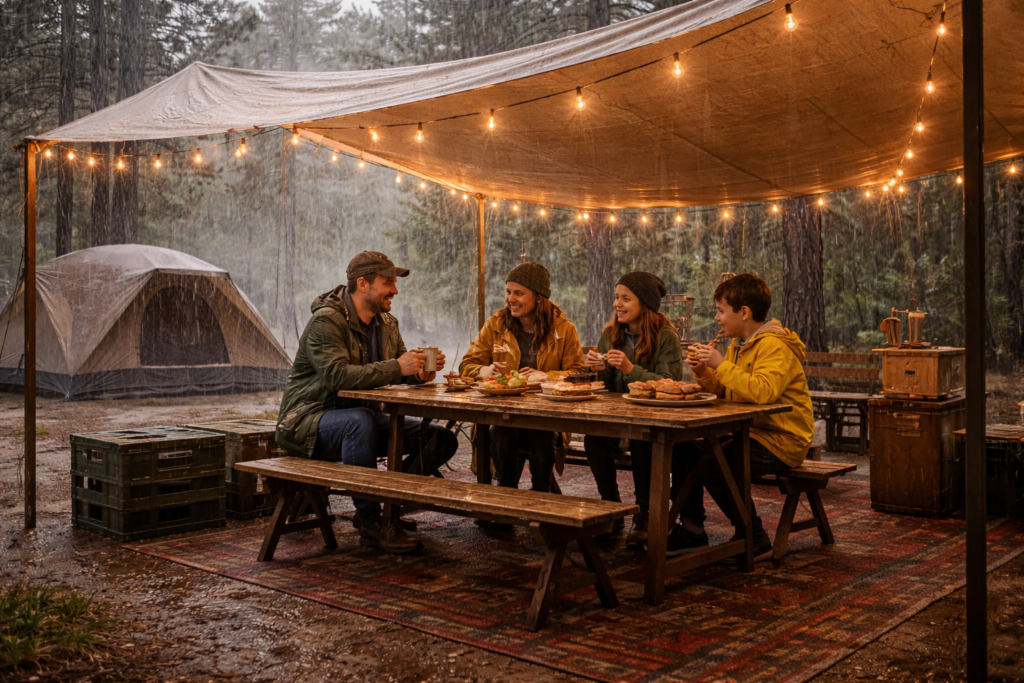
The calculus is significantly changed while camping with kids. Children require a recognizable “home base” at the campsite, shade, and a place to play while it’s pouring without being confined inside the tent. That is instantly created by a canopy. Even if you only use the umbrella as a rain-day kid-zone on one trip every season, it still deserves its location because of how quickly it can be set up.
Kids also make filth, such as muddy hands, wet rain gear, and sandy shoes. A canopy provides a space between the unclean outside and the clean sleeping tent. Several times, this alone has prevented our tent from being destroyed.
Scenario 4: You Do Group Camping or Frequent Gatherings
When camping in a group, a canopy is practically a must. It is a logistical headache for four or more people to eat dinner together in the rain without an overhead cover. A group camping experience is transformed by a 10×20 canopy over a central kitchen/dining space. When shared, the setup is quick with several hands, the cost per person is low, and the difference in quality of life is significant.
Scenario 5: Hot, Sunny Climates
A canopy is more of a need than a luxury when camping in areas where sun exposure is a major problem, such as deserts, the seaside, or southern states. When you have nowhere to hide from the sun for extended periods of time, you run a serious danger of contracting a heat-related illness.
When compared to direct sun exposure, a broad canopy can reduce the temperature of the area beneath it by 15 to 20 degrees Fahrenheit. Many seasoned campers would view a cover as more crucial in these conditions than many other items of equipment that are considered necessities.
Can a Canopy Replace a Tent? Let’s Address This Directly
Sometimes people ask if they can simply use a canopy instead of a tent; sleep under the canopy rather than carrying both. In a nutshell, it’s practically foolish in almost every situation, but technically feasible under extremely particular circumstances.
Here’s why:
- No insect protection: A canopy with no sidewalls provides zero protection from mosquitoes, midges, or other biting insects. Even one night without insect protection in bug season will make you wish you’d brought the tent.
- No wind protection: Horizontal rain and wind come in sideways. A canopy top keeps off overhead drizzle but does nothing for driven rain. You’ll wake up soaked.
- No privacy: Sleeping in an open canopy at a campground means sleeping in view of everyone around you. Most people find this uncomfortable.
- No thermal protection: A canopy provides almost no insulation benefit. In cool weather, sleeping under just a canopy means waking up cold and damp from condensation.
Canopy-only sleeping only makes sense in two situations: car camping in a vehicle where you sleep inside the car and use the canopy just for the campground setup, or hammock camping in dry, warm, bug-free conditions with a tarp overhead.
💡 Pro Tip: A good tarp shelter (like a silnylon or polycryo tarp rigged on trekking poles) packs small, covers you while you sleep, and functions similarly to a canopy during the day but with less headroom if you want to simplify your setup while still having overhead coverage for sleeping.
Can a Tent Replace a Canopy?
When used as a changing room, gear storage, or rain cover, a tent can partially replace a canopy—but only if you’re ready to get the inside dirty and wet. Since the interior of the tent is where you sleep and where clean equipment is kept, most people aren’t.
You can get some covered outdoor living space without lugging a separate canopy with some larger family tents that have canopy-style awning attachments (an extended rainfly that creates a covered porch area). Look for tents with vestibules or awning attachments that provide usable covered outdoor space if you’re still in the market for a tent and can’t afford two shelters.
However, a tent awning is a compromise rather than an equivalent for real all-day camping use, such as cooking, mingling, and staying dry during prolonged rain.
The Practical Setup: How Tent and Canopy Work Together
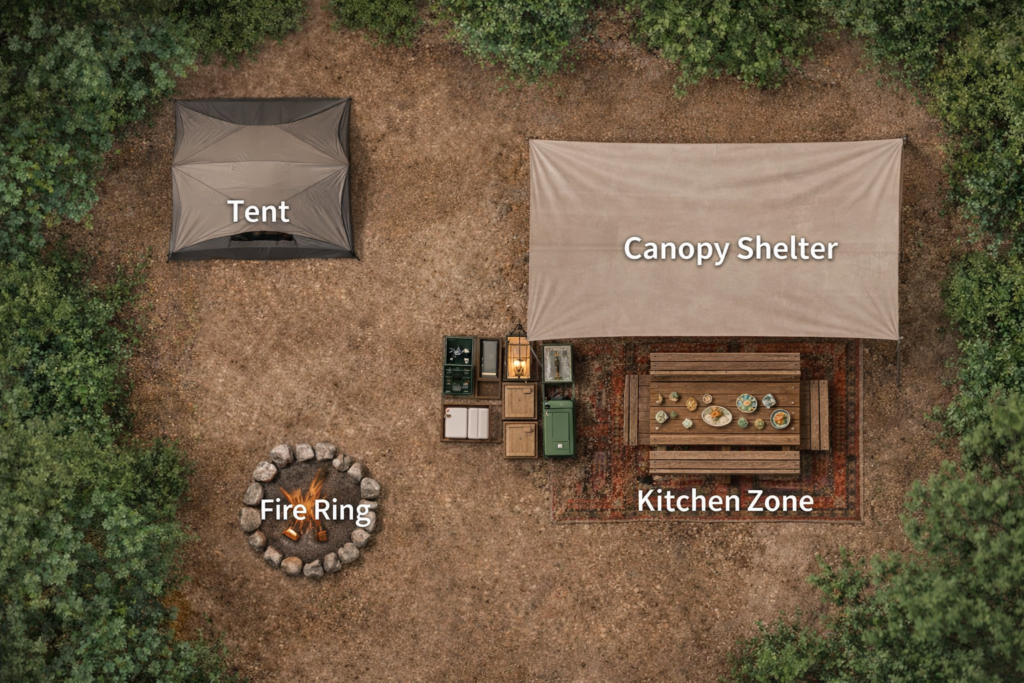
If you do decide to run both, here’s how a well-organized dual-shelter campsite typically looks:
- Position the tent at the ‘bedroom’ end of your campsite, oriented for good ventilation and access.
- Set up the canopy at the ‘living room’ end — typically over the picnic table or fire ring area.
- Keep 4–6 feet of open space between the tent and canopy so rain doesn’t channel between them.
- Run your kitchen and cooler under the canopy, away from the tent. Food smells near tents attract wildlife.
- Use the canopy as your wet gear zone — rain jackets, muddy boots, damp towels. Keep the tent interior dry.
- Run camp chairs and your social space under the canopy. The tent is for sleeping, not hanging out.
💡 Pro Tip: Position your canopy so that it faces the fire ring or any vista, not the parking lot. You’re making the most of the area where you’ll spend the majority of your waking hours, so plan it as a living room rather than as an afterthought.
When to Buy a Canopy
When you go camping for the first time, avoid purchasing a canopy. Discover the true sources of friction in your particular camping style by going camping for a season with simply a tent. A canopy makes sense if, after a full season, you find yourself constantly wanting for more covered outside space, particularly for meals in the rain, afternoon heat, or social gatherings.
You might not actually need one if, after a season, you find that you spend most evenings by the campfire, are rarely at camp during the day, and have never once desired for additional shade or rain shelter. It’s okay that not everyone does.
Campers who are aware of the issue they are solving are the ones who never regret purchasing a canopy. Those campers who bought one because they felt compelled to do so rather than because they had recognized a genuine need are the ones who believe theirs was a waste of money.
Size Guide
A quick practical note on sizing, since this is one of the most common follow-up questions:
- 10×10 (100 sq ft): Perfect for 2–4 people. Fits a camp kitchen, small table, and 4 chairs comfortably. This is the right starting size for couples and small families.
- 10×15 (150 sq ft): Good middle ground for families of 4–6. Slightly more setup complexity than a 10×10 but meaningfully more usable space.
- 10×20 (200 sq ft): For group camping of 6+ people or when you want a serious kitchen/dining space. Heavy and bulky to transport, but transforms a group campsite.
- 12×12 or larger: Usually commercial-grade; overkill for most personal camping. Stick to 10×10 or 10×20 for recreational use.
When in doubt, go slightly bigger than you think you need. You’ll use the extra space. Nobody ever comes back from a camping trip saying their canopy was too spacious.
Frequently Asked Questions
Q: Which is better for camping: a screen house or a canopy?
A: Your bug condition will determine this. An open canopy does not offer bug protection like a screen house, which is completely covered in mesh and has a solid roof. However, the cost, weight, and setup complexity of screen houses are far higher. A canopy with clip-on mesh sidewall panels is a decent compromise if bugs are your main concern; you get the flexibility of a canopy with the ability to add bug protection as necessary.
Q: Is it possible to use a camping canopy in my backyard?
A: Definitely—and a lot of people do. Camping canopies are great for shade constructions, outdoor eating, and backyard gatherings. They may be stored in a bag, are easy to set up and take down, and are usually less expensive than special patio umbrellas or pergolas. The primary drawback is that they should be brought inside during storms because they are not intended to be put up all the time.
Q: When it rains a lot, how can I keep the space beneath my canopy dry?
A: Although heavy rain causes runoff from the canopy edges and splash-back from the ground, a canopy top effectively conceals overhead rain. Use a ground tarp or outdoor mat below the canopy, place it on slightly elevated ground if at all possible, and think about getting a canopy with a gutter system (channels that divert water off the edges away from the interior) to reduce damp floors.
Q: I have a big vestibule in my tent. Is a canopy still necessary?
A: sizable vestibule helps you get there in part by offering some transitional room and sheltered storage for damp equipment. However, compared to a specialized canopy, vestibules usually offer less clearance and usable square footage. A spacious vestibule might be sufficient for brief excursions in favorable weather. A dedicated canopy is worthwhile for long-term camping, group excursions, or consistently rainy weather.
Q: How much should I spend at the very least on a camping canopy?
A: Set aside at least $80 to $120 for a 10×10 canopy if you want one that will last and perform well when camping. The quality of the canopy fabric and frame material drastically decreases below that pricing threshold. Canopies range in price from $40 to $60, however many of these won’t last a single windy camping weekend. Over the course of two or three camping seasons, it is almost always more cost-effective to spend a little more up front.